





Some people may have fallen behind on their rent payment for reasons such as “I forgot to check my bank balance and the rent payment didn’t go through” or “I accidentally forgot the payment due date.”
A delay of just a few days usually isn’t a major issue. However, if late payments continue, you may receive reminder notices, face contract termination, or in the worst case, be ordered to vacate the property.
In this article, we’ll explain what to do if your rent payment is late, how to handle the situation properly, and introduce public support systems and consultation centers you can contact when you’re having difficulties paying your rent.
At Village House, we offer a wide range of rental properties across all 47 prefectures of Japan, with monthly rent starting from just ¥20,000! If you’re looking for a new place to live, be sure to check out our website!
Understanding rent payment rules in Japan
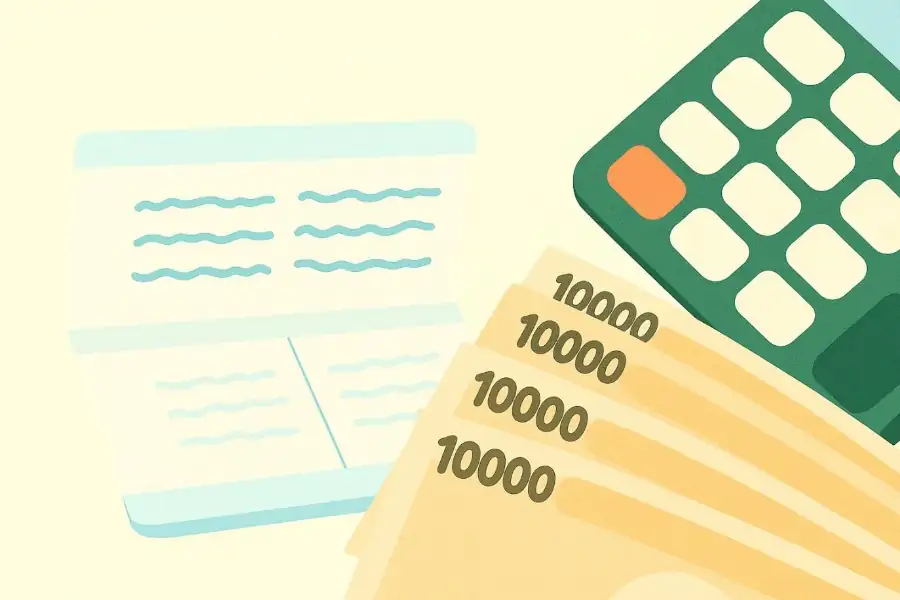
In Japanese rental housing, it is common practice to pay rent in advance. For example, the rent for April is paid on a designated date in March.
There are two main reasons why rent is paid in advance:
To ensure rent collection
Even if the tenant suddenly has difficulties making payments, paying rent in advance helps reduce the risk of late or missed payments. Advance rent payment is a mechanism designed to protect the landlord’s rental income.
To prevent issues when moving out
Since rent is paid in advance, you’ve already paid the rent for your final month. After you move out, the landlord just calculates the amount for the days you actually stayed and adjusts the difference. This can help prevent issues like forgetting to apply the final daily adjustment.
The rent payment due date is often clearly stated in the contract, for example, “Transfer the following month’s rent to the designated account by the 25th of each month” or “Automatic bank withdrawal on the 28th.” Tenants are obligated to pay rent on this specified date.
If you miss the payment deadline, you may be charged a late payment fee as stated in the contract. This fee is typically calculated at an annual rate of up to 14.6% on the unpaid amount.
If late payment continues, you may eventually receive certified mail demanding payment, termination of your rental contract, or even an eviction order. If you know that your payment will be delayed due to personal or financial circumstances, it’s important to contact your landlord or property management company as soon as possible to avoid any disputes.
Source: Article 9 Item 2 | Consumer Contract Act
Grace periods and late payment fees: What’s legally allowed

When rent is not paid by the due date, the landlord or property management company has the right to charge a late payment fee. While there is no legally defined grace period under Japanese law, in practice, many landlords and property management companies allow a grace period of several days to about one week.
According to Article 419 of the Civil Code, when a monetary obligation is not fulfilled, the statutory interest rate in effect at the time of the delay is applied. Currently, the statutory interest rate is set at 3% per year, but if a separate contractual interest rate is specified in the rental contract, that rate will take precedence.
However, under Article 9, Item 2 of the Consumer Contract Act, any late payment interest rate exceeding 14.6% per year is considered invalid in rental contracts involving consumers. Therefore, in practice, “14.6% per year” is generally treated as the upper limit.
Sources:

First warning and communication with your landlord or real estate agency
When your rent payment is late, the landlord or property management company will usually contact you to inform you that “the rent has not been received.” This reminder does not mean you will be forced to move out; it is simply a confirmation or reminder.
When you receive such a notice, it’s important to respond honestly. Specifically explain the reason for the late payment and provide a specific date for when you plan to pay the rent. Avoid giving vague answers, as this can create distrust and may result in your guarantor company or guarantor being contacted.
Moreover, if you ignore the reminder and fail to respond, the landlord may consider the missing payment to be long-term delinquency, which could result in termination of your rental contract or even an eviction order. In general, a delay of about one month won’t immediately lead to eviction, but it’s best to act quickly and communicate sincerely.
A payment reminder is not meant to blame the tenant, but to confirm the situation and discuss future action. Start by responding via phone or email, then apologize and clearly state when you plan to make the payment.
When the guarantor company steps in

After discussing your situation with your landlord or property management company, make sure to document the details in writing, not just verbally.
Relying only on verbal agreements can lead to misunderstandings. For example, the landlord might later say, “I don’t remember making that promise,” or the tenant might feel pressured by demands like, “Pay everything at once or your contract will be terminated!” Such miscommunication can cause disputes between both parties.
To avoid misunderstandings and problems, it’s important to clearly state the payment amount, due date, and method in writing. Having it in writing makes it easier to check later and serves as evidence that both parties reached an agreement, even if payment is delayed.
Items to include in the agreement
- Date of the agreement
- Amount of unpaid rent (and the period it covers)
- Payment method and schedule (e.g., “X amount to be paid on [date], followed by X amount on the same date each month”)
- Actions to be taken in the event of a breach of agreement (late payment fee, contract termination, etc.)
- Signatures and seals of both parties
Legal procedures: Eviction and contract termination

If a tenant falls behind on their rent payment, the rent guarantor company will temporarily cover the rent on their behalf and pay the landlord or property management company. This process, known as “subrogation payment”, is designed to reduce the landlord’s financial risk in cases of unpaid rent.
When a rent payment is overdue, the landlord or management company will request payment from the guarantor company. The guarantor company will then pay the overdue rent, and once the payment to the landlord is complete, the tenant will repay the same amount to the guarantor company.
It is important to note that, in some cases, the tenant will be charged both the guarantee service fee stated in the contract as well as unpaid rent, late payment fees, and other related expenses, which could result in a significant burden on the tenant.
For more info, check out our blog: Rental Apartment Woes? Here’s Where to Get Expert Advice!
How long before eviction happens? Typical timeline

① From the missed payment to the first reminder
If rent is not paid by the due date, the landlord or property management company will contact the tenant by phone or email to request payment. If payment is still not confirmed after several attempts, a formal demand for payment will be sent by certified mail.
② Contract termination notice
If rent continues to be unpaid, the landlord will send you a “Contract Termination Notice.” This will terminate the rental contract. In most cases, the period between the initial reminder and contract termination is approximately one to three months.
③ Eviction lawsuit (eviction order)
If the tenant does not vacate the property even after the contract has been terminated, the landlord may file an “eviction lawsuit” with the court. During the trial, the court will review any outstanding payments and details of the rental contract, and then an eviction order will be issued. It typically takes around two months from the time of filing the lawsuit to the time of the judgment.
④ Eviction enforcement
If the tenant still does not move out after the court’s judgment has been finalized, the landlord can request for eviction enforcement. First, a “demand for eviction (eviction notice)” will be issued by an enforcement officer. Then, approximately one month later, a forced eviction date is set, during which the tenant’s belongings may be removed and the locks changed.
Please note that actions such as changing locks or disposing of the tenant’s belongings without a court order amount to “taking matters into one’s own hands” and are prohibited by law. If you experience such behavior, you should contact the police or a lawyer for assistance.
How to settle unpaid rent and protect your tenancy
As a general rule, rent must be paid by the due date. However, if payment is unavoidably delayed, take action as soon as possible using the following measures.
Contact your landlord or property management company
As soon as you realize that your rent payment will be late, contact your landlord or property management company as quickly as possible. Be sure to clearly explain the reason for the delay and specify the expected payment date. If you already know in advance that your payment may be delayed, it’s best to inform them early.
Even a short delay of two or three days is technically considered a late payment under the law. Since late rent payment can be grounds for terminating the rental contract, while it rarely results in immediate termination, it may damage the relationship of trust between you and the landlord.
Prompt communication and honest responses will help prevent disputes. It’s best to avoid waiting until you receive a reminder from the landlord or management company.
Pay the overdue rent as soon as possible
Once you’ve contacted your landlord or management company, make every effort to pay your overdue rent as soon as possible. Since payment methods vary depending on the property and the terms of your contract, be sure to check before contacting them.
The most common payment method is by bank transfer to a bank account specified by the landlord or management company. When making the transfer, be sure to enter the correct bank name, branch name, account number, and account holder’s name. Please note that bank transfer fees are usually borne by the tenant.
Depending on the property, you may be required to make the payment directly at the office. In such cases, be sure to request a receipt or proof of payment as evidence. When visiting in person, expressing your apologies sincerely can help rebuild trust.
Support and consultation services for tenants in financial difficulty

Housing Security Benefit
This benefit is provided to individuals who meet certain criteria, such as losing their job, going out of business, or experiencing a significant reduction in income. Under this program, the local government directly pays the rent-equivalent amount predetermined by each municipality to the landlord’s account for a standard period of three months, with a possible extension of up to nine months.
For more details on the Housing Security Benefit, please contact your local municipal office.
Source: Ministry of Health, Labour and Welfare | Housing Security Benefit
Japan Legal Support Center (Houterasu)
The Japan Legal Support Center, commonly known as Houterasu, offers legal consultation services for issues related to housing, such as late rent payment, rental contract termination, and eviction. As long as you meet certain income and asset requirements, you can receive legal advice free of charge or at a low cost. Each consultation lasts approximately 30 minutes, and the service can be used up to three times.
Source: Houterasu | How to Use Free Legal Consultations
Furthermore, it is also recommended to consult with your local government’s welfare department, community support desk, or housing consultation center. If you’re struggling to pay your rent, consult with them as soon as possible.
For more info, check out our blog: How To Get Government Rental Assistance
Summary
Below is a summary of how to properly handle late rent payments as well as the specific steps to take if your rent payment continues to be delayed.
- Rent is generally paid in advance
- If your rent payment is late, contact your landlord or management company as soon as possible
- Be honest about the reason for the delay and clearly state your expected payment date
- Document every detail of your discussions with your landlord or management company in writing
- Ignoring overdue rent can lead to a sequence of these procedures: demand for payment → contract termination → eviction notice → compulsory eviction
- After the guarantor company temporarily covers the overdue rent and makes payment to the landlord, the tenant will receive a bill for repayment (subrogation payment)
- Prolonged late payments may result in late payment fees and could potentially affect your credit record
- If paying rent becomes difficult, seek assistance from public support programs or consultation centers as soon as possible
- Certain support programs like the “Housing Security Benefit” may be available
- It is illegal for a landlord to take unilateral actions on their own, such as changing locks or disposing of the tenants’ belongings
At Village House, there are no security deposits, key money, or agency fees*. Moreover, the rent is reasonably priced, so if you’re looking to save on housing and initial move-in costs, please feel free to contact us!
*Depending on the contract details and screening results, a security deposit may be required.
Related articles

Hello, I’m Machiko Doi, a freelance writer who writes about housing and living in Japan.
I live in an 80-year-old house that I inherited from my grandparents along with my two shelter cats and daughter.
We live a relaxed life while repairing the house.
I like to cook vegetables from the garden and fresh fish caught by my father, and enjoy them with cold beer on a hot day or hot sake on a cold day.