




In Japan, each municipality has its own detailed rules for disposing of trash. Collection days, sorting categories, and even the type of trash bags you must use can vary, so it’s important to check the local rules as soon as you move in.
Rules for trash sorting and disposal are important for keeping your living environment clean and preventing problems with neighbors. In this article, we’ll explain in great detail the rules and procedures for disposing of trash in Japan.
At Village House, we offer affordable rental properties with rent starting from just ¥20,000! Additionally, there are no security deposits*, key money, or agency fees, so you can save on initial costs. If you’re looking to save as much as possible on initial costs, be sure to check out our website!
*Depending on the contract details and screening results, a security deposit may be required.
Why trash sorting matters in Japan
There are three reasons why trash sorting matters in Japan:
- To recover recyclable resources and make effective use of limited natural resources
- To reduce the burden on incinerators and extend the lifespan of landfills
- To reduce environmental impact
In Japan, the Waste Disposal and Public Cleansing Act requires the national and local governments to properly sort, collect, and dispose of trash in order to protect the living environment. It also states that residents have an obligation to “sort their trash before disposal and cooperate with local government policies” (Article 2-3).
Sorting rules vary by region because each municipality has its own disposal facilities and collection methods. The Waste Disposal Act stipulates that municipalities are responsible for the disposal of general household waste. Therefore, each municipality creates its own sorting rules and collection methods based on what is most efficient for its region.
In other words, in some areas plastics are sorted as recyclable waste, while in others they are grouped together with burnable waste. Incorrect sorting can result in the trash not being collected or placing extra burden on waste-processing facilities, so be sure to check your municipality’s trash collection schedule or official website, and follow the sorting rules specific to your area.
How to check the trash sorting rules in your area
The most reliable way to check your local trash sorting rules is by visiting the official website of the municipality where you live. Simply search for “(City/Town Name) Official Website” using a search engine. You can also check the trash sorting rules by using nationwide municipal information websites such as the Japan Agency for Local Authority Information Systems.
Keep in mind that collection days and sorting categories can vary even within the same city, depending on the district, block number, or house number. This can affect the type of trash you can put out for the day or what kind of trash bag you must use. This is why confirming your new address is essential for proper trash disposal.
Another useful option is to use a trash sorting app provided by your municipality. These apps often include features such as reminders for collection days, a simple search tool for how to sort specific items, a digital trash disposal calendar, and notifications directly from the local government.
Trash sorting app
| threeR Android|iPhone | threeR is a free app that provides local trash sorting rules, collection schedules, and reminder notifications. It’s used by many municipalities across Japan and is also available in 20 different languages. |
| Trash Lens Android|iPhone | This is a trash sorting support app that lets you simply point your smartphone at an item to instantly identify which category it belongs to (recyclable, burnable, non-burnable, etc.). As of November 2025, it is available in 497 municipalities across Japan. |

Trash collection days and basic disposal rules
Many municipalities have a designated collection system for trash, with burnable, non-burnable, and recyclable waste being collected on designated days of the week.
For example, in Saitama City, burnable waste is collected twice a week, while non-burnable and recyclable waste are collected once a week. Trash must be put out at the designated pickup locations by 8:30 AM. It is generally prohibited or strongly discouraged to put garbage out the night before. The standard practice is to put it out in the morning of the scheduled collection day. (Source: Saitama City – How to Dispose of Household Trash)
Furthermore, some municipalities also require the use of designated trash bags (or designated stickers). Trash will not be collected unless it meets the designated trash bag requirements. Note that in municipalities that require the use of transparent or translucent bags; black or opaque bags will not be collected.
For apartment buildings, the rules can vary depending on the property. Some buildings have a covered dumpster where residents are allowed to throw out trash the night before collection, so it’s best to check with your landlord or management company.
Common trash categories (burnable, non-burnable, recyclable) and how to sort them
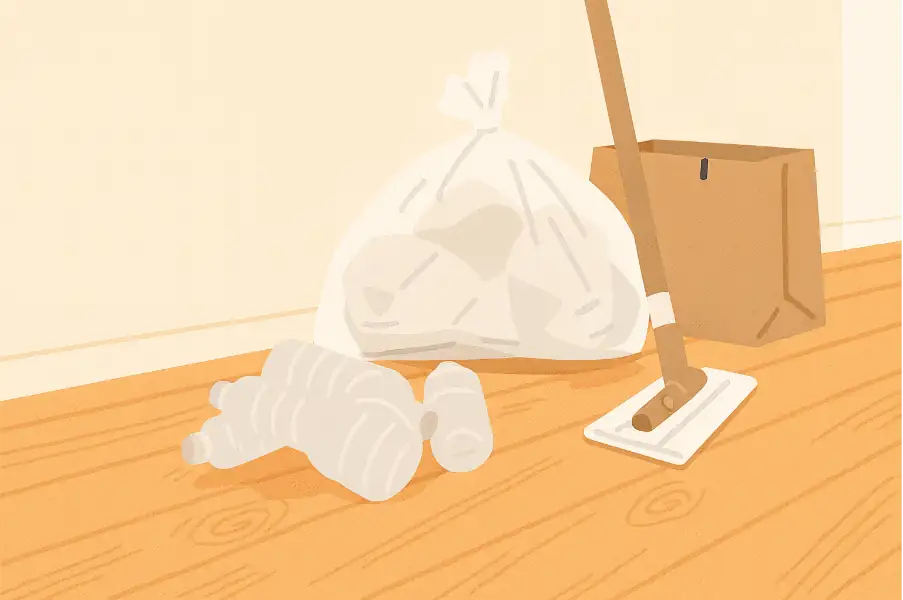
Trash sorting is essential for protecting the environment and promoting resource recycling. However, because rules vary greatly depending on the municipality, it’s not uncommon for people to wonder, “Where should I put this trash?”
Thus, to avoid confusion when sorting trash, let’s understand the four basic waste categories that are common nationwide and the general rules adopted by local governments.
| Category | Common examples | General rules |
| Burnable waste | ・Food waste ・Paper ・Wood scraps ・Leather products | ・Drain excess moisture from food waste ・Wrap items that may release liquid in newspaper ・Solidify used oil or absorb it with paper before disposal |
| Non-burnable waste | ・Metal items (knives, frying pans, etc.) ・Glassware ・Ceramics ・Small electronic devices (remote controls, power cords) ・Disposable lighters | ・Wrap fragile items in newspaper and label them with “Danger” ・Ensure spray cans are used up completely (some municipalities even require puncturing them) ・Batteries and electronic devices may go through a separate collection system |
| Recyclable waste | ・PET bottles (drinks and seasonings) ・Aluminum and steel cans ・Glass bottles (food and beverages) ・Paper cartons, cardboard, newspapers, magazines, miscellaneous paper | ・Remove caps and labels from PET bottles and rinse the inside ・Rinse cans and bottles to remove any residue ・Sort paper by type and bundle with string (dirty or strongly scented paper should be disposed of as burnable waste) |
| Oversized garbage | ・Furniture ・Home appliances | ・Usually requires prior reservation ・Confirm the designated collection date and pickup location beforehand ・Fees may apply ・Some items may need to be dismantled or disassembled before disposal |
Source: Ministry of Health | ecojin
Another option is to take unbroken home appliances or everyday items to a recycling shop instead of throwing them away. For small electronic devices that are broken and difficult to repair, some municipalities provide small appliance recycling boxes, so it’s a good idea for you to check. If the item cannot be reused or recycled, dispose of it as non-burnable waste.
Keep in mind that lithium-ion batteries, which are used in power banks and heated tobacco products, must never be mixed with burnable or regular waste. Doing so can cause fires or explosions inside the garbage truck or at the waste processing facility. Always follow your municipality’s guidelines and dispose of lithium-ion batteries properly.
How to recycle PET bottles, cans, and glass properly

Plastic bottles, glass bottles, and cans may not be accepted for recycling if they are not sorted correctly or if they still have some residue inside. To ensure these limited resources can be reused effectively, make sure to follow the right procedures before disposing of PET bottles, cans, and glass bottles.
| Category | Preparation before disposal | Collection method |
| PET bottles | ・Remove the cap ・Remove the label ・Rinse the inside ・Whether you should crush the bottle or not depends on your municipality | ・Collected on your municipality’s designated collection day ・Put them in recycling boxes in supermarkets or convenience stores ・Bring them directly to a recycling facility |
| Cans | ・Rinse the inside ・Whether you should crush the bottle or not depends on your municipality | ・Collected on your municipality’s designated collection day ・Put them in recycling boxes in supermarkets or convenience stores ・Bring them directly to a recycling facility |
| Glass bottles | ・Remove the cap ・Rinse the inside ・Sort by color: clear, brown, and other colors | ・Collected on your municipality’s designated collection day ・Bring them directly to a recycling facility |
Source: Chikusei City | How to Dispose of Recyclable Materials (Recycling)
How to dispose of large items and home appliances
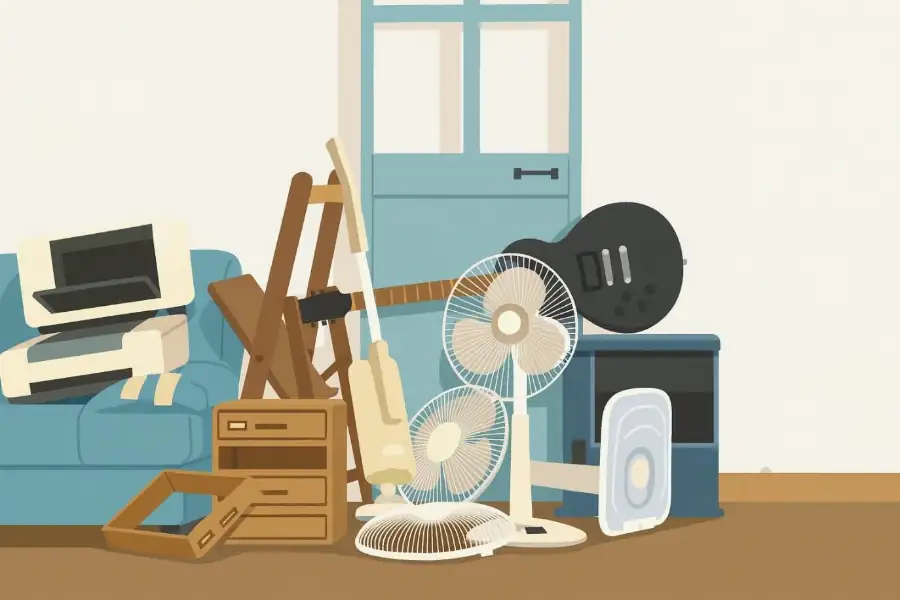
How to dispose of oversized garbage
Unlike regular household waste, disposing of oversized garbage requires submitting an application in advance to a oversized garbage collection center run by your municipality. Applications can be made by phone, internet, or fax. Since they often do not accept sudden pickup requests, it’s best to apply early.
In general, oversized garbage disposal requires a handling fee. The fee varies depending on the item, ranging from 200 to 1,000 yen. After purchasing a oversized garbage disposal ticket (sticker) from a convenience store or supermarket, attach it to the item and place it at the designated collection point on the specified date and time.
Since rules differ by municipality, be sure to check the oversized garbage disposal method and fees for your specific area.
Source: Osaka City | About Oversized Garbage Collection
Home Appliance Recycling Law
To dispose of home appliances specified in the Home Appliance Recycling Law, a recycling fee is required in addition to the transportation cost set by each retailer.
| Item | Recycling fee | |
| Air conditioner | ¥990 | |
| TV | CRT (15 inches or smaller) | ¥1,320~¥1,870 |
| CRT (16 inches or larger) | ¥2,420~¥2,970 | |
| LCD / Plasma TV, etc. (15 inches or smaller) | ¥1,870 | |
| LCD / Plasma TV, etc. (16 inches or larger) | ¥2,970 | |
| Refrigerator and freezer | 170L or smaller | ¥3,740 |
| 171L or larger | ¥4,730 | |
| Washing machine and clothes dryer | – | ¥2,530 |
As of November 2025
Source: Association for Electric Home Appliances, List of Recycling Fees for Major Manufacturers
For more info, check out our blog: 5 Ways to Dispose of Unwanted Household Items Before Moving
Trash disposal etiquette in apartments and housing complexes
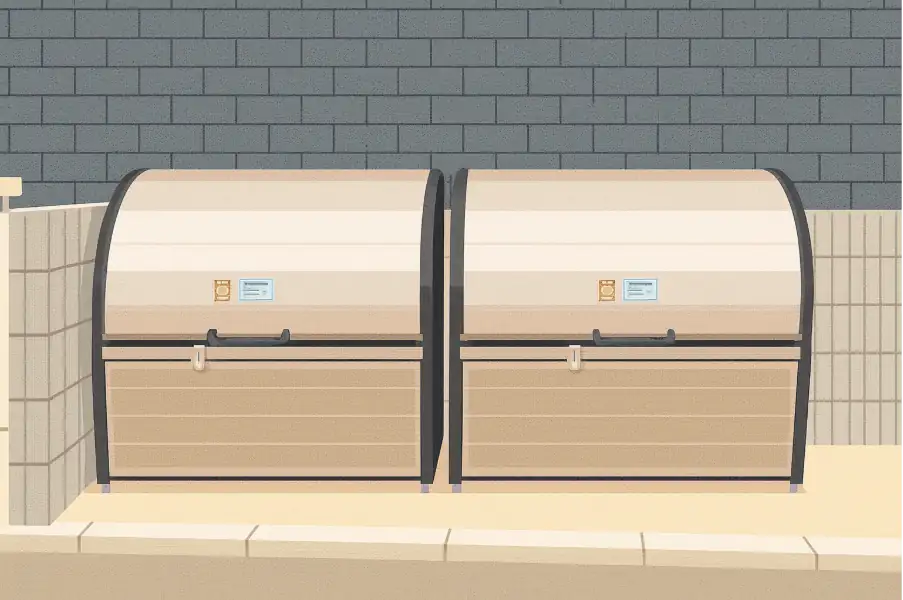
In apartments and housing complexes, residents share the same trash disposal area, so everyday consideration helps maintain a comfortable living environment. In housing complexes, basic rules like following the designated collection days and times and sorting waste correctly are essential to prevent problems with neighbors.
If possible, double-bag your trash and tie the bags securely to prevent odors and leakage. Food waste in particular can easily produce unpleasant odors, so it’s important to take measures by draining excess moisture or absorbing it with newspaper.
Moreover, to prevent crows or cats from rummaging through your trash, always close the disposal area door after taking out trash, or make sure to properly cover the area with an anti-bird net as part of basic etiquette.
Common issues and how to handle them
Forgetting the trash collection day
If you’re concerned that you might forget the collection day, one solution is to add the schedule to your smartphone calendar. As mentioned earlier, using a reminder notification feature from a trash sorting app is also recommended.
Trash bag tearing
If your trash bag tears easily, try using a thicker trash bag or simply double-bag the regular ones. One of the main reasons for unpleasant odors is that leaked liquid from the trash seeps to the bottom of the bin and starts to rot.
By using two bags, even if liquid leaks from the inner bag, the outer bag will catch it, thus keeping your trash bin clean.
Dealing with odors during hot seasons
Trash tends to stink more easily during hot weather. To prevent odors, you can temporarily store trash in the freezer before taking it out, or wrap it in newspaper and drain any moisture before throwing it away.
For more info, check out our blog: Apartment Odor Removal Tips for Summer: Smelly Garbage, Drains, and Shoes
Making mistakes with trash disposal rules after moving
When you’re planning to move, make sure to check the official website of your new municipality in advance to find out the rules for trash sorting, collection days, the color of trash bags to use, designated collection points, etc.
Summary
Below is a summary of the key points regarding trash disposal rules and procedures in Japan:
- In Japan, proper trash sorting, collection, and disposal are mandatory by law in order to protect the living environment
- Trash disposal rules vary by municipality because each one has different processing facilities and collection methods
- Always check your municipality’s official website for the trash disposal rules where you live
- Each city or town has its own designated trash collection days
- As a general rule, trash must be put out in the morning of the collection day, before the specified time
- Some municipalities require designated trash bags or stickers for disposal
- Waste is mainly sorted into four categories: burnable, non-burnable, recyclable, and oversized garbage
- Recycling fees and transportation costs apply to disposing of air conditioners, televisions, refrigerators, and washing machines
- When disposing of lithium-ion batteries, make sure to take them to the municipality’s designated collection point
- To avoid forgetting collection days, use a trash sorting app to check schedules and receive notifications
At Village House, we offer a wide range of properties across all 47 prefectures, starting from just ¥20,000! If you’re looking for affordable rental properties, please feel free to contact us!
Related articles:

Hello, I’m Machiko Doi, a freelance writer who writes about housing and living in Japan.
I live in an 80-year-old house that I inherited from my grandparents along with my two shelter cats and daughter.
We live a relaxed life while repairing the house.
I like to cook vegetables from the garden and fresh fish caught by my father, and enjoy them with cold beer on a hot day or hot sake on a cold day.