





Two common issues that arise when it comes to rental contracts in Japan are how security deposits are handled, and the cost of restoring the property to its original condition upon moving out. Security deposits are typically used to cover the cost of repairs to restore the property to its original condition upon moving out. However, many people may be concerned about whether they have to pay for all the repairs upon moving out and how the security deposit refund is processed.
In this article, we will explain the typical initial costs of renting in Japan, the legal rules surrounding restoration obligations, how the security deposit refund is processed, and where to go if you run into any problems. Make sure to check these points carefully before signing your rental contract to avoid unnecessary problems later.
At Village House, we offer affordable rental properties starting from around ¥20,000 per month! Plus, no key money or handling fees are required, allowing you to significantly save on initial move-in costs. Not to mention, you might also qualify for an exemption on deposits! We have over 1,000 properties all across Japan, so if you’re looking to save on initial costs, be sure to take a look at our website.
Understanding rental deposits in Japan (shikikin, reikin, and more)

When signing a rental contract in Japan, you’ll need to prepare initial move-in costs in addition to the monthly rent. In many cases, this amounts to four to six months’ worth of rent. For example, if the monthly rent is ¥80,000, you will generally need around ¥400,000 in total.
Let’s take a look at the typical initial costs required when renting a property in Japan:
| Security deposit (shikikin) | One month’s rent | This deposit is used to cover the cost of restoring the property to its original condition upon moving out. Generally, the deposit will be refunded to the tenant after deducting all the expenses incurred. |
| Key money (reikin) | One month’s rent | A non-refundable payment made as a token of appreciation to the landlord after signing the rental contract. It is not refunded to the tenant upon moving out. |
| Advance rent | One month’s rent | If you move in starting from the month after signing the contract, you’ll need to pay the first month’s rent in advance. When moving in mid-month, the rent is calculated on a per-day basis. |
| Agency fee | One month’s rent + consumption tax | This is a fee paid to the real estate agency that helped you find the property and handled the contract procedures. Legally, the maximum amount is one month’s rent plus consumption tax*. |
| Guarantor fee | Half a month’s rent + common service fees | This fee is required when using a rental guarantor company, which acts as a backup in case you’re unable to pay the rent. |
| Fire insurance fee | ¥15,000 | This is an insurance policy to prepare for potential damages such as fire, water leaks, etc. The payment is made to a property insurance company. |
| Lock replacement fee | ¥15,000〜25,000 | Costs vary depending on the type of lock. |
To save on initial move-in costs, consider options such as Zero-Zero Properties (which have no deposits or key money), negotiating the agency fee, or taking advantage of free rent promotions. Initial costs may vary depending on the management company or landlord, so be sure to check with the person in charge if you have any questions.
For more info, check out our blog: Zero-Zero Properties: The Best Deal You’ve Never Heard Of?
Legal responsibility and rules between a tenant and a landlord

With the enforcement of the Revised Civil Code (2020 Amendment) in April 2020, the legal standards regarding security deposits and property restoration in rental agreements were updated.
Many people assume that “restoring the property to its original condition” means returning it exactly as it was when they moved in, even though that’s not actually the case. Restoration to the original condition does not include repairing normal wear and tear or damages that occur naturally through everyday living.
In other words, the cost of repairs caused by natural deterioration from everyday living is not the tenant’s responsibility, but should be borne by the landlord (lessor), and covered through the rental income.
So, what exactly counts as normal wear and tear, and what types of damages or stains should the tenant be responsible for? Let’s take a closer look at some common examples:
| Tenant’s responsibility | Landlord’s responsibility | |
| Keys | Paying the cost to replace keys that are lost or damaged through carelessness. | Paying the cost to replace keys for a new tenant. |
| Water heater | Paying for repairs or replacement if the unit is damaged due to improper use. | Paying for replacement when the unit has reached the end of its service life. |
| Wallpaper | Paying for cleaning or replacement if nicotine stains or mold appear due to smoking indoors or leaving condensation untreated. | Covering the cost of normal discoloration or marks on walls behind furniture, such as a TV or refrigerator. |
| Floor | Paying for repairs if scratches, dents, or other damage occur (for example, from a chair with casters). | Covering the cost of normal indentations or marks caused by placing furniture on vinyl or carpet flooring. |
| Fixtures | Paying for repairs if pillars, doors, or other fittings are damaged. | Covering the cost of repairs for glass that cracks or breaks due to an earthquake. |
In the case of flooring, natural fading caused by sunlight is considered normal wear and tear and therefore falls under the landlord’s responsibility. On the other hand, if the tenant leaves a window open and rainwater seeps in, causing discoloration to the floor, it is considered the tenant’s negligence, and the repair costs must be covered by the tenant.
Similarly, small pinholes from thumbtacks or pins used to hang posters or calendars, or discoloration of wallpaper due to sunlight, are considered to be caused by normal use and are the landlord’s responsibility. However, if the tenant creates large holes from installing shelves using screws or nails, they will be responsible for the repair costs.
For more info, check out our blog: Tips on How to Repair Minor Damages to Get Your Deposit Back
Lease clauses that affect your deposit (restoration & cleaning fees)

Restoration to original condition
According to the Ministry of Land, Infrastructure, Transport and Tourism (MLIT)’s “Guidelines on Restoration to Original Condition and Related Disputes”, normal wear and tear, daily-use stains, and deterioration due to everyday living are not subject to restoration. However, the old Civil Code did not clearly state this, causing ambiguous judgments. The April 2020 Civil Code amendment now explicitly states that tenants are not obligated to restore the property to its original condition for wear and tear or deterioration caused through no fault of their own
When the leased property has sustained damage after being handed over to the tenant (excluding deterioration over time or wear and tear resulting from normal use and the natural aging of the property), the tenant is obligated to restore the property to its original condition upon termination of the lease. However, this obligation does not apply if the damage is due to reasons beyond the tenant’s fault or negligence.
Cited from: Article 621 | Tenant’s Restoration Obligation
That being said, depending on the contract details and the scope of repairs, there may be cases where the above rule does not apply. Some agreements may include special clauses that specify different arrangements. To avoid misunderstandings, make sure to check carefully with the landlord or real estate agency about which areas need restoration and who is responsible for the costs.
Cleaning fees
According to the Ministry of Land, Infrastructure, Transport and Tourism’s “Guidelines on Restoration to Original Condition and Related Disputes”, cleaning fees are normally incurred when a tenant moves out. Thus, charging a flat fee at the time of move-in is not a legal requirement. However, if the rental contract includes a special clause that specifically states that the tenant is responsible for house cleaning fees, then the tenant is legally obligated to cover those expenses.
Average cleaning costs (in the absence of intentional damage or negligence)
| Property Size | Cleaning Costs |
| 1K | ¥20,000 ~ ¥35,000 |
| 1DK, 1LDK | ¥35,000 ~ ¥50,000 |
| 2DK, 2LDK | ¥40,000 ~ ¥80,000 |
| 3DK, 3LDK | ¥50,000 ~ ¥90,000 |
If you have any concerns, such as “The cleaning fee is too expensive” or “Do I really need to pay a cleaning fee when moving out?”, make sure to confirm with the person in charge for clarification before signing your contract.

Expenses deducted from the security deposit

The cost of restoring the property to its original condition is generally deducted from the security deposit paid when you move in. If the repair costs exceed the deposit amount, you will be required to pay the difference. Conversely, if the repair costs are lower, the difference will be refunded to you.
As mentioned earlier, based on the Ministry of Land, Infrastructure, Transport and Tourism’s guidelines, the security deposit is generally refunded in full if the damage is limited to normal wear and tear or deterioration over time. However, keep in mind that deductions may be made from the security deposit in the following cases:
- Cleaning fees (if specified in the rental contract)
- Repair costs for scratches/stains on wallpaper/flooring that are outside the scope of normal deterioration over time
- Severe stains or damage requiring the replacement of fixtures, such as in the kitchen, bathroom, or toilet
Move-out inspections and documentation

The move-out inspection is conducted to determine who is responsible for the costs of repairs that need to be made. During the move-out inspection, all furniture and appliances will be removed, and the property will be cleaned, after which the tenant and the management company or landlord will inspect the room together.
Note that if there is evidence of damage or stains that existed before you moved in, you will not be required to pay for repairs. Take photos or videos and submit them to the landlord. When taking photos or videos, be sure to enable the automatic date and time stamp recording function, as it is an important key point.
Once the inspection is over, you will receive a written statement or confirmation letter that includes the details and breakdown of the security deposit settlement. If any charges are unclear or insufficiently explained, you may request clarification by comparing them to the terms in your rental contract.
Furthermore, if there are any charges you do not agree with, or if the landlord refuses to issue a statement, do not sign the document. In case the situation seems likely to escalate into a dispute, it is advisable to consult a professional expert, as explained further below.
How to get your deposit refunded smoothly
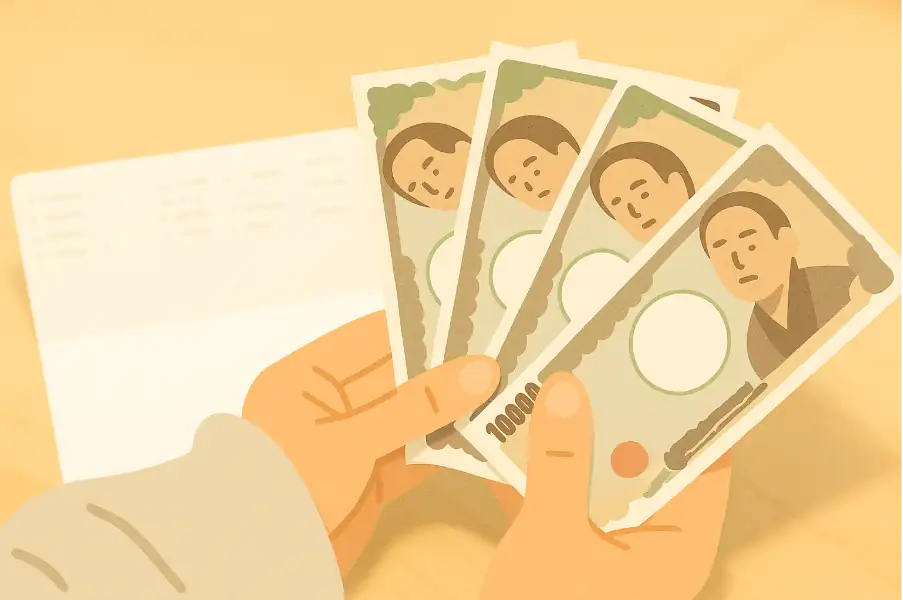
Once you receive the detailed statement, carefully check the details of the repair costs, cleaning fees, and any unpaid rent, and inquire as soon as possible if you have any questions or notice discrepancies. As a general rule, refunds are typically processed within one to two months after moving out. Some contracts specify the exact time frame for the deposit refund, so be sure to check your rental contract for peace of mind.
If the security deposit refund is delayed, try sending an email to urge them to immediately process the refund.
Sample email for a delayed refund
To: [Company Name or Contact Person]
Dear [Name of Contact Person] / To Whom It May Concern at [Real Estate Company Name],
I hope this message finds you well.
This is [Your Full Name], the former tenant of [Apartment Name], Room [Number].
I received the move-out inspection report and settlement statement on [Date]. However, more than a month has passed, and I have not yet received the refund of my security deposit.
In light of this, I would like to confirm the status of the refund process in accordance with the return schedule and settlement details outlined in the lease agreement. I would appreciate it if you could let me know the expected transfer date and the refund amount.
Thank you very much for your time and assistance.
Sincerely,
――――――――――――
[Your Full Name]
[Address]
Phone: [Your Phone Number]
Email: [Your Email Address]
――――――――――――
Resolving disputes and legal support options
If you run into any problems with the management company or landlord, please contact the organizations listed below. They have staff with expertise in rental contract issues who will be happy to assist you.
Before contacting them, prepare your rental contract, payment receipts (such as bank transfer statements) from the time of signing the contract, and any records of communication with the management company or landlord. Having these documents on hand will make it easier to discuss your situation in detail.
| Consumer Hotline | Telephone: 188 Business hours: Weekdays 9:00–17:00 / Weekends & holidays 10:00–16:00 Closed during the year-end/New Year holidays |
| National Consumer Affairs Center of Japan | Telephone: 03-3446-1623 Business hours: 10:00-12:00 / 13:00-16:00 Closed on weekends, public holidays, and year-end/New Year holidays |
| Japan Consumer’s Association | Telephone: 03-5282-5319 Business hours: 10:00-12:00 / 13:00-15:00 Open on Tuesday, Thursday, and Friday only |
| Real Estate Transaction Improvement Organization | Telephone: 0570-021-030 Business hours: 10:00-16:00 Closed on weekends, public holidays, and year-end/New Year holidays |
| Japan Property Management Association | Consultation accepted in writing (via web form, fax, or mail) Business hours: 10:00-17:00 Closed on weekends and public holidays |
| Japan Legal Support Center (Houterasu) | Telephone: 0570-078-374 Business hours: Weekdays 9:00-21:00 / Saturday 9:00-17:00 Closed on Sunday, public holidays, and year-end/New Year holidays |
If the issue cannot be resolved through the consultation hotline, you may consider civil mediation or a small claims lawsuit, where professional mediators or judges act as intermediaries between tenants and management companies (or landlords) to help resolve the dispute. For more details, please contact your local summary court.
Preventing problems: What to check before signing

Items to check in the contract
In addition to basic details such as the contract period, renewal terms, rent payment method, and notice period for termination, make sure to confirm the scope of repair/restoration of dirt and damage to confirm what will be considered the tenant’s responsibility.
Check the details of the security deposit, key money, and cleaning fees
In addition to the security deposit and key money, check the details of any fees that may be deducted when you move out (house cleaning fees, air conditioning cleaning fees, lock replacement fees, etc.). In some cases, cleaning fees are a flat rate that is charged to the tenant, so it’s best to clarify the exact amount and details before signing the contract.
Key points to confirm in advance for peace of mind
- To what extent is normal deterioration over time the landlord’s responsibility
- Specific examples of scratches or stains on walls or floors that would be the tenant’s responsibility
- The procedure for the move-out inspection and the general timeline for the return of the security deposit
- How repair costs are calculated (actual expenses or a fixed amount)
- The justification(s) for any cleaning fees or lock replacement fees, if any
If you have any questions or concerns, be sure to confirm them with the real estate agency or landlord. Communicating not only verbally but also in writing, such as by email, will help prevent potential disputes when you move out.
Summary
Below is a summary of basic rules and precautions to note regarding security deposits, key money, and restoration costs, as well as important points to keep in mind before signing a contract.
- The security deposit is used to cover restoration costs upon moving out
- The tenant is not responsible for restoration costs due to normal wear and tear or deterioration over time
- The key money is paid as a token of appreciation to the landlord and is not refundable
- Restoration does not mean returning the property to its exact original condition as it was when you moved in
- The tenant is responsible for damage or stains caused by negligence or carelessness
- Cleaning fees upon move-in are charged to the tenant only if explicitly stated in the rental contract
- Confirm who is responsible for what repair during the move-out inspection
- Carefully review the settlement statement and confirmation letter; do not sign if you are not satisfied with the details
- Consult an expert if any problem arises
- If you have any questions or concerns before signing the contract, be sure to confirm them with the landlord or real estate agency
At Village House, our properties do not require a security deposit, key money, or agency fees*. Additionally, by taking advantage of free rent promotions**, you can significantly reduce your initial moving costs. If you want to move into a new home while keeping initial costs low, please feel free to contact us!
*Depending on the contract details and screening results, a security deposit may still be required.
**Some properties are not eligible for free rent promotions
Related articles:

Hello, I’m Machiko Doi, a freelance writer who writes about housing and living in Japan.
I live in an 80-year-old house that I inherited from my grandparents along with my two shelter cats and daughter.
We live a relaxed life while repairing the house.
I like to cook vegetables from the garden and fresh fish caught by my father, and enjoy them with cold beer on a hot day or hot sake on a cold day.